Distinguishing findom addiction from healthy submission: how to tell the difference
I used to blur the line between devotion and harm. Over time I learned to tell the difference between satisfying submission and behavior that became an addiction. This article lays out the psychological signs, everyday examples, and practical steps I used to get clearer about my limits and choices.
If you want to read about the emotional texture of a session, here’s a short piece I often point people to that captures the experience well: a close look at findom sessions.
Why the distinction matters
Submission can bring comfort, meaning, and erotic satisfaction. Addiction strips those things away. It replaces choice with compulsion, and pleasure with a need that feels dangerous. Knowing which is which matters for your mental health and your finances.
Core differences I look for
- Agency vs compulsion. Healthy submission is a voluntary act that I can pause or stop. Addiction feels like an urge I can’t resist even when I don’t want to act.
- Purpose vs escape. When I submit for pleasure or connection, I know why I’m doing it. If I’m using findom to numb anxiety, escape loneliness, or avoid real-life problems, that’s a warning sign.
- Control over resources. In healthy play I set budgets and stick to them. Addiction leads me to overspend, borrow, or hide transactions.
- Consequences acknowledged. I can accept setbacks and learn. Addiction repeats harmful patterns despite clear negative outcomes.
Subtle examples from my life
Example one: In a late-night mood I once gave a domme an unplanned tip because it made me feel connected. The next morning I felt embarrassed but not ruined. I paid my bills, reflected, and put a small buffer in place. That was healthy submission with an honest follow-up.
Example two: There was a month when I stopped opening bank statements. I sent money to multiple accounts to chase a high that faded fast. My phone logs and messages showed the pattern before I fully admitted it. That was closer to addiction, denial and secrecy were obvious.
Behavioral red flags
- Hiding or lying about payments.
- Neglecting essentials, rent, bills, medications, because of transfers.
- Spending spikes tied to stress or mood swings rather than planned sessions.
- Inability to stop despite repeated promises to oneself.
- Financial dependence on borrowing or using savings to fuel tributes.
Emotional and cognitive signs
If shame, anxiety, or intrusive thoughts dominate, the dynamic needs attention. Healthy submission coexists with self-respect. Addiction corrodes it. One pattern I noticed in myself was rationalizing further spending to soothe guilt; that mental loop was a clear sign I was trying to fix feelings with payments instead of dealing with the feelings.
How to test your situation
- Track one month of spending and motivations. Note times, amounts, and the feeling that led to each payment.
- Set a small, reversible limit and see if you can honor it for two weeks.
- Tell a trusted friend or therapist about your pattern and ask for feedback without defensive explanations.
- Compare your current behavior to past periods when you had different pressures or resources. Is it stable or escalating?
For newcomers wondering what to expect from a first session, a practical primer helped me set boundaries early on: what to expect in your first findom session.
Steps to regain balance
- Immediate triage: pause automatic transfers where possible and set a temporary spending freeze for nonessentials.
- Repair basics: prioritize essentials and create an emergency buffer with a separate account.
- Replace compulsion with structure: put a modest, preapproved monthly figure for play, and use a third-party tool to limit access if needed.
- Therapy and peer support: cognitive-behavioral strategies helped me untangle urges from values. A therapist who understands kink is ideal.
- Reflective rituals: write a short note to yourself after a session describing why you paid. Over time patterns emerge and choices become easier.
Trade-offs and tensions
Choosing limits sometimes reduces the immediacy of pleasure. When I tightened my budget I missed impulsive highs, but I also regained peace of mind. Another tension: some dommes expect free-flowing tribute. A findomme can enforce strict rules, or she can work within safe boundaries. Either approach is valid, but my responsibility is to my life outside the fetish.
It’s also normal to feel grief when cutting back. You can be sad about less extravagant gestures and still be making the healthiest move.
When to seek professional help
Get help if financial danger becomes real, eviction risk, defaulting on loans, or suicidal thoughts tied to findom. A therapist can help with compulsive behavior and underlying issues like impulse control, depression, or trauma.
Quick checklist that isn’t a checklist
Ask yourself: can I pause and feel okay? Do payments align with my budget? Am I honest with people who matter? If you hesitated on most of those, slow down and reassess.
For a personal take on stepping back from findom when it stops being sustainable, there’s a piece that helped me process the shift: one person’s account of finding balance.
I tend to trust the quieter signals with distinguishing findom addiction from healthy submission. If the setup only works when you move fast or stop asking basic questions, that usually tells you more than the sales pitch does.
I would also review this related article to compare this angle with a related perspective before making assumptions.
FAQ
- How common is findom addiction? I can’t quote stats, but from forums and conversations I’ve seen it’s not rare. People with impulse control issues or financial stress are at higher risk.
- Can a findomme tell if someone’s addicted? Sometimes. A domme may notice secrecy or desperation, but only the submissive truly knows the internal drivers.
- Will stepping back ruin my dynamic? Not if you communicate honestly. Many relationships adapt when boundaries change. If a domme refuses to respect limits, that’s a red flag for exit.
Distinguishing addiction from healthy submission is rarely binary. I suggest small experiments, clear accounting, and honest conversations. That approach helped me keep the parts of findom that enrich my life while shutting down the parts that didn’t.
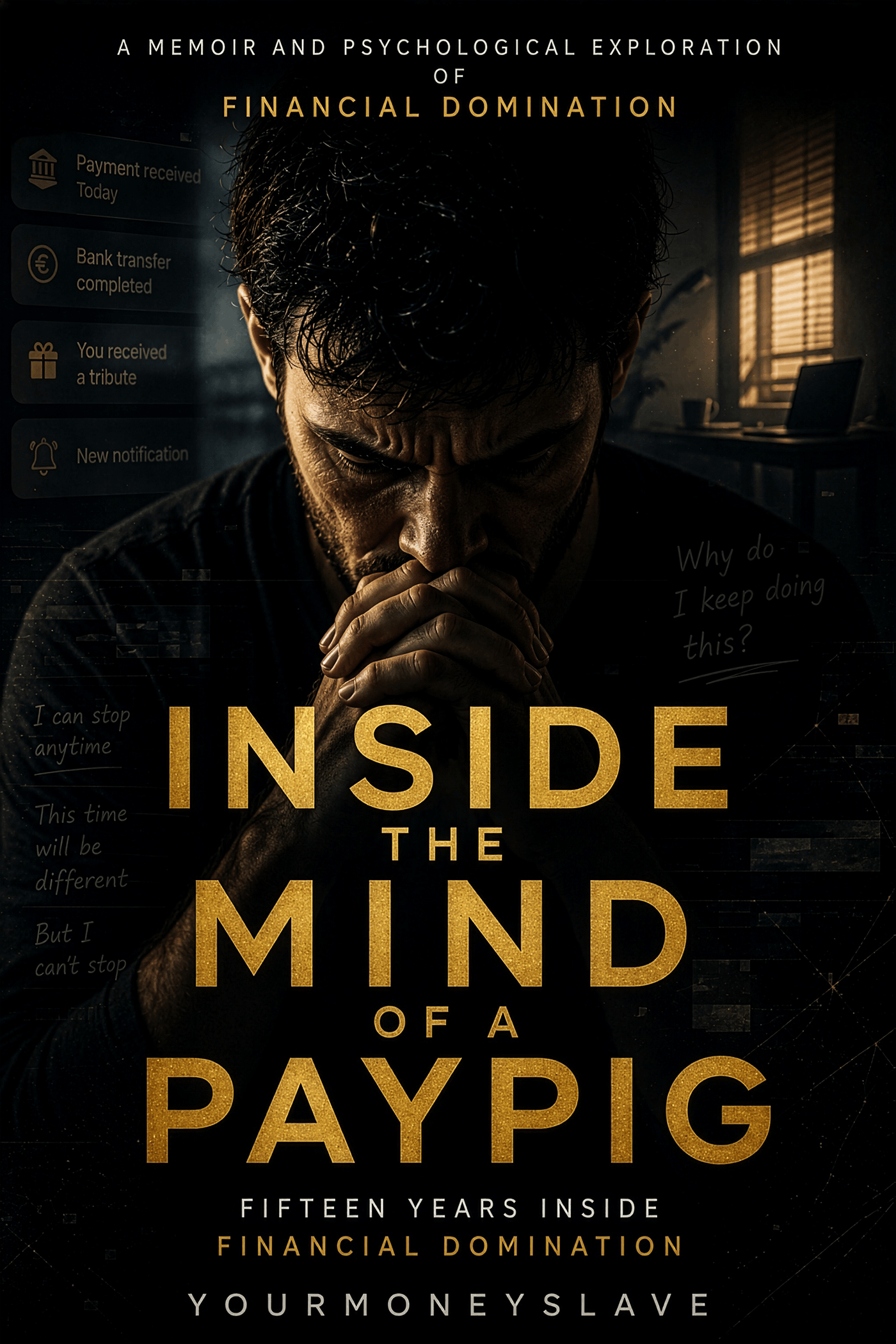
Inside The Mind Of A PayPig
After 15+ years inside financial domination, I finally wrote a book about obsession, shame, desire and the questions I am still trying to answer.
Read the free sample