Differences Between Compulsion and Kink in Findom: How to Tell Which It Is
I’ve been on the paying side of findom long enough to notice a worrying pattern. Some moments feel clearly like a consensual kink: exciting, controlled, and meaningful. Other moments feel like compulsion: urgent, shameful, and hard to stop. Understanding the differences between compulsion and kink in findom matters if you want to enjoy the scene without wrecking your finances or sense of self.
What I mean by kink versus compulsion
By kink I mean behavior that you enter knowingly, where you set limits, and where the activity enhances your life in some way. By compulsion I mean patterns that keep repeating even when they harm you, that you feel compelled to do despite negative consequences. Both can look similar on the surface. Both can involve guilt and secrecy. The key difference is control and consent over time.
Early on I read a thread that linked to an article about relationships and findom. That piece pushed me to ask whether my spending fit in a healthy life or whether it had become a private crisis.
Practical signs that it’s kink
- You choose when and how much to give. You plan tributes in advance and stick to a budget.
- The act enhances your mood or relationship but doesn’t cause chronic stress.
- You can miss a session without feeling crushed. The desire returns after a break.
- You can explain why the scene matters to you, beyond the money, and that explanation feels true.
Practical signs that it’s compulsion
- You spend impulsively, then immediately regret it or try to hide it.
- You chase the feeling with ever-larger amounts to get the same hit.
- Spending causes financial harm or interferes with work or relationships.
- You lie to yourself about limits and fail to follow through on self-imposed rules.
One real-life example: I once set a weekly budget and felt in control for months. Then an account I followed posted a humiliating task and I spent twice my limit just to prove I would do it. The rush lasted a day, the regret lasted weeks. That jump felt compulsive because I lost planning, perspective, and the ability to stop.
Another time, I negotiated a scene with a domme-influencer who clearly stated limits and payment steps. I could back out without fallout. The session left me satisfied and calmer. That felt like kink: pleasurable, bounded, and integrated into life.
Gray areas and why it’s messy
It’s rarely black and white. Compulsion can start inside a kink. A fun pattern becomes a problem when life stressors lower your ability to self-regulate. Conversely, long-term consensual dynamics can look obsessive to outsiders even when they’re healthy for the people involved.
There’s also social and financial pressure. Findom scenes sometimes reward escalating tributes with attention. That reward can nudge people toward riskier behavior. From the submissive side, I noticed how praise for big tributes made small, steady giving feel less meaningful. That tension is a common driver toward compulsive cycles.
Trade-offs and tensions to accept
If you want the intensity of findom while protecting yourself, expect trade-offs. Strict budgets lower the thrill but reduce harm. Openly negotiated scenes can feel less spontaneous, though they preserve consent. Avoiding all risk kills the erotic charge, but ignoring risk can destroy your life. You have to choose which losses you can live with.
Practical steps I use to stay on the kink side
- Set a clear, nonnegotiable budget in a place you can’t easily change, and put small friction between you and payment.
- Keep an accountability partner who knows your limits and can check you when you start slipping.
- Schedule money for findom like any other entertainment expense. If it’s missing, accept the scene is off that month.
- Pay attention to mood patterns. If you only spend when stressed, angered, or intoxicated, that’s a red flag.
A findomme or domme I followed once posted a public reward for a large tribute and the community cheered. Watching that made me realize how external validation can override private limits. A domme can create incentive, but only the submissive controls the next payment.
When to seek help
If spending causes continued debt, ruin to relationships, or thoughts about self-harm, get help. A therapist who understands sexual behaviors or impulse control can help you untangle desire from compulsion. If you need immediate financial control, consider freezing payment methods or putting your cards on someone trustworthy to hold.
For more on when findom stops fitting into committed life, see this short take I found useful on findom and session dynamics. It helped me frame the difference between ritualized play and harm.
How to talk about this with a domme
Be honest about limits without shame. A respectful domme can offer structure that makes the scene safer and more satisfying. If a domme pressures for escalation or punishes you for setting limits, that’s a boundary violation and not part of consensual kink.
Small rituals that protect the kink
- Create a pre-session checklist: budget, mood, and a fallback plan if you feel triggered.
- Use timers or cooling-off periods before large payments.
- Celebrate small, planned tributes. Rituals that honor limits reduce the urge to binge.
Finally, if you’re worried but not sure, take a pause. Weeks of intentional abstinence can reveal whether you miss the kink or the compulsion. That pause helped me see patterns I had ignored for years.
For practical warnings aimed at people like me, this resource covers common pitfalls and signs to watch for about issues and warnings for paypigs. It’s not a substitute for therapy, but it helped me spot damaging patterns sooner.
I do not think differences between compulsion and kink in findom gets clearer when people add more drama around it. Most of the useful judgment happens in the small details that are easy to skip.
FAQ
- Can I enjoy findom and still be in control? Yes. Most healthy participants set budgets, build rituals, and make payments part of their broader financial life. Control means choices you can keep over time.
- How long before it becomes compulsion? There’s no fixed timeline. Compulsion shows up as repeated harm and inability to stop, not a number of months. Watch outcomes, not duration.
- What if a domme pressures me to give more? Pressure to break your limits is a red flag. You can ask for structure that supports limits, or walk away. If you can’t enforce limits alone, get external safeguards.
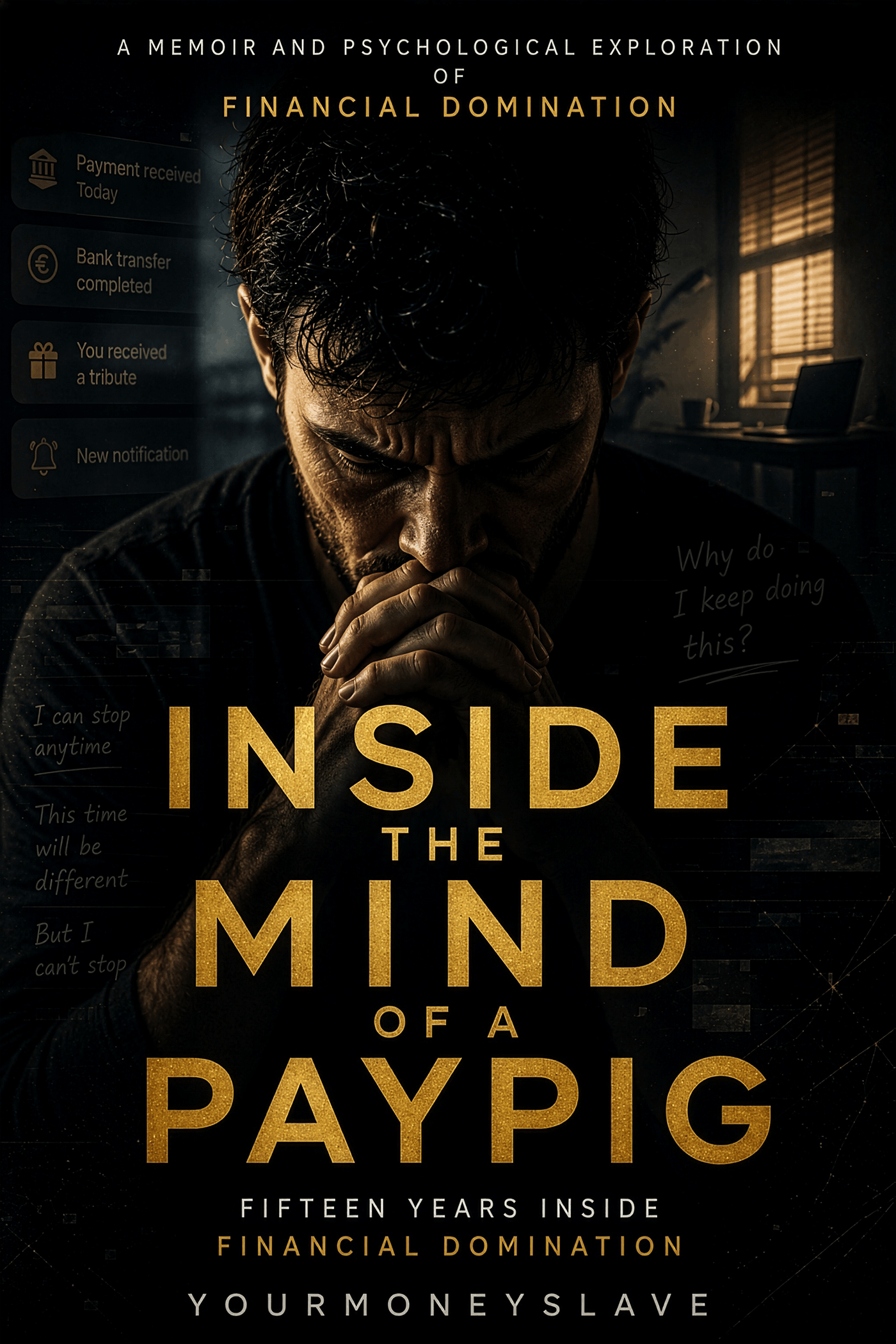
Inside The Mind Of A PayPig
After 15+ years inside financial domination, I finally wrote a book about obsession, shame, desire and the questions I am still trying to answer.
Read the free sample