Distinguishing compulsion from kink in findom contexts: how to tell the difference and stay safe
I’ve been involved in the findom world as a paying submissive for years, and one question keeps coming up: how do you tell if the urge to give is a kink or a compulsion? The two can look the same on the surface. Both involve strong impulses, secrecy, and a rush after giving. The difference matters, because it affects consent, wellbeing, and long-term consequences.
Why the distinction matters
When it’s kink, the behavior is a chosen, erotic script that enhances life. When it’s compulsion, it’s a repeating pattern that causes harm and feels out of control. I’ve watched friends and read forums where people confuse the two, and that confusion can worsen debt, relationship damage, and shame. A clear sense of what’s happening helps you set boundaries that actually work.
For a practical starting point, see one of my posts about session dynamics and expectations: what a first session can feel like.
Core signs that it’s a kink
- It’s predictable. The urge comes in identifiable contexts, like after a humiliating message or a ritualized countdown. You can usually name the trigger.
- You can pause and rehearse. You might delay for a day or swap a tribute for another act, and the sexual excitement remains.
- It fits within your budget and obligations most of the time. You still pay bills, keep work, and maintain key relationships.
- There’s clear consent. You want the dynamic and can say no, even if you sometimes choose to give for the thrill.
- Afterward there’s satisfaction rather than prolonged regret. You feel erotic fulfilment more than distress.
Core signs that it’s a compulsion
- The giving is unpredictable and feels urgent. It often happens alone, late at night, or when stressed.
- You try to stop and can’t. You set limits and break them repeatedly, and the disappointment grows.
- It harms practical life. You miss payments, borrow money, or hide transactions from partners.
- The relief is short lived. The cycle is shame, give, brief relief, then more shame and higher urges.
- You feel driven rather than chosen. The decision feels automatic, not erotic planning.
Two real-life style examples
Example one: I once followed a domme who scheduled weekly auctions. I budgeted a small tribute each month. I looked forward to the ritual. If the price felt right, I paid and enjoyed the kick. When I missed a week, I wasn’t distressed. That pattern read like kink to me because it was contained and mostly predictable.
Example two: another period in my life looked different. Work got stressful, and giving became a quick fix. I hid payments from my partner and took money meant for groceries. The brief buzz soon turned into panic when bills came due. I kept promising myself I’d stop, and failed. That felt like compulsion. It took outside help and stricter constraints to break the cycle.
Gray areas and trade offs
Some dynamics live in the middle. You might start with a negotiated kink and slowly drift into compulsion because of life stressors or debt. Or you might have a healthy script that becomes riskier as the financial stakes rise. The tension is real. A ritual that once fit your life can become dangerous when circumstances change.
There’s also a trade off between erotic intensity and safety. Some findommes build high-arousal scenes that encourage bigger spending. That can feel amazing while it lasts, but it requires honest limits and backup plans if limits break. From the submissive side, I prefer systems that let me step back without losing dignity.
Questions to ask yourself
- Do I hide my giving from people who trust me? If yes, why?
- Have I ever taken money I needed for essentials to pay a tribute?
- Can I go a month without giving and still feel satisfied?
- Do I plan my giving, or do I act on impulse and regret it later?
- When I try to stop, do urges decrease over time or escalate?
Honest answers aren’t always comfortable, but they’re the best tool for change.
I cover the difference between sessions aimed at punishment versus pleasure in another piece that looks at session intent and how findom sessions function: how sessions feel from different angles.
Practical steps if you suspect compulsion
- Introduce friction. Remove saved cards, put limits on accounts, or use a third party to manage funds.
- Set nonnegotiable safety rules. That might be an amount that can’t be touched or a cooling-off period of 72 hours before any new tribute.
- Tell one trusted person. Accountability reduces secretive behavior and shame.
- Replace the ritual. Find smaller acts that deliver erotic meaning without financial harm, like writing a confession or engaging in humiliation that doesn’t involve money.
- Seek professional help if urges feel overwhelming. A therapist can help untangle impulse control from sexual expression.
When a findomme can help
A findomme who cares about sustainability can design sessions that test boundaries without causing ruin. One domme I watched set clear tribute tiers and enforced a visible countdown to keep the submissive in control. That kept drama and temptation in view. From the submissive side, this felt safer because it honored consent and provided predictable structure.
If the other person pressures for secrecy or mocks limits, that’s a red flag. Respect for boundaries is the difference between erotic play and harm.
For a look at balancing findom with life priorities, see my reflection on changing priorities: when findom isn’t the main focus.
I do not think distinguishing compulsion from kink in findom contexts gets clearer when people add more drama around it. Most of the useful judgment happens in the small details that are easy to skip.
I would also review this related article to compare this angle with a related perspective before making assumptions.
FAQ
- Can compulsion be treated without quitting findom entirely?
Yes. Many people rebuild boundaries and keep consensual play. The key is restoring control, using safeguards, and getting support if needed. - Is occasional regret normal after a tribute?
Yes. Regret alone doesn’t mean compulsion. Look for patterns of repeated harm or loss of control. - Should partners always know about findom activity?
I recommend honesty when financial decisions affect shared life. Secrets about money tend to cause more damage than a difficult conversation.
Distinguishing compulsion from kink is rarely neat. I’ve had moments that looked like both. The best approach is practical: measure the harm, increase friction, and choose play that you can afford emotionally and financially. If you want a focused read on keeping balance in moneyslavery, this post helped me rethink priorities: finding balance in money play.
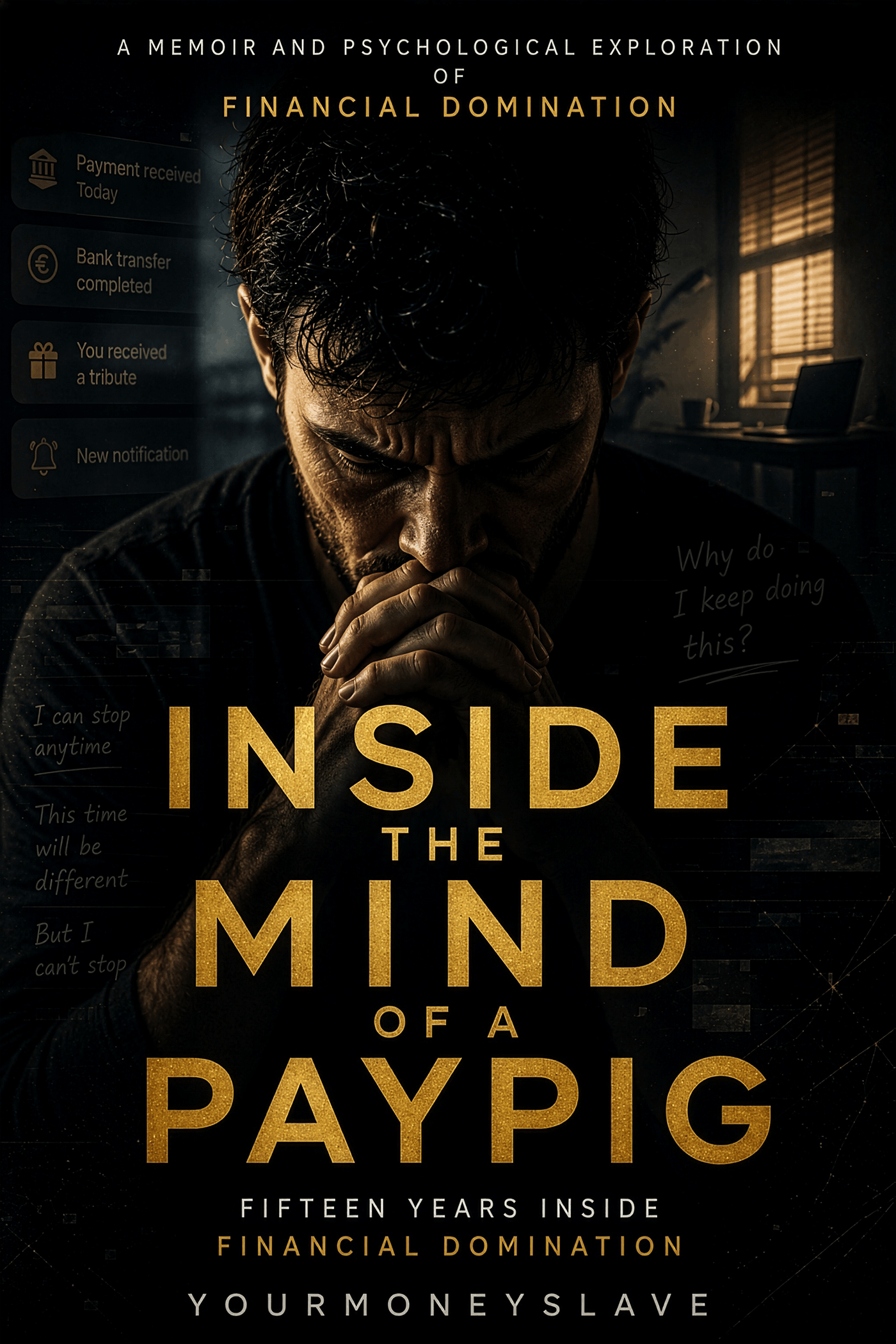
Inside The Mind Of A PayPig
After 15+ years inside financial domination, I finally wrote a book about obsession, shame, desire and the questions I am still trying to answer.
Read the free sample