Distinguishing compulsion from kink in findom relationships: how to tell the difference and stay safe
People search for “distinguishing compulsion from kink in findom relationships” because they want to know whether what they’re feeling is a chosen fetish or something more harmful. I get asked this a lot. I’ll walk through the signs I look for, share subtle real-life examples, and offer practical steps you can use to evaluate your own situation.
Early on, some clear language helps. A kink feels like an intentional practice that enhances pleasure and connection. Compulsion feels like it runs you, it creates regret, and it interferes with your life. Those definitions sound simple, but the boundary blurs in real life.
One place to start is emotional tone. With a kink, you usually feel anticipation and satisfaction before, during, and after. With compulsion, you might feel relief in the moment and a wave of shame afterward. I once saw a submissive who loved the ritual of giving, she planned her spends carefully and felt proud afterward. By contrast, a different client told me she would empty accounts impulsively late at night, then hide the receipts, and later lie to herself about the amounts. That pattern looked compulsive.
I’ve written about what a findom session can feel like in practice, and reading about typical session dynamics can help you compare your experience to common patterns. If you want a practical primer on session elements, this piece is useful: what a normal findom session involves.
Key behavioral signs that suggest compulsion
Watch for these behaviors, not as a checklist, but as converging clues.
- Loss of control over spending, where you plan to give a little and keep giving past your limits.
- Secretive or deceptive behavior, like hiding transactions or lying to partners about money.
- Interference with responsibilities, such as missed bills or draining emergency funds.
- Failed attempts to stop, where you try to cut back but return to the same pattern without a clear plan.
- Mood-driven spending, especially late at night, after alcohol, or during stress spikes.
These signs don’t condemn the kink itself. People manage responsible findom relationships all the time. The issue is when those behaviors repeat, cause harm, and you feel powerless to change them.
How a kink looks when it’s healthy
Healthy findom involves consent, boundaries, and negotiation. A typical healthy pattern includes budgeting before sessions, cooling-off periods, and clear aftercare. I’ve worked with someone who set automatic transfers to a third account labeled “gifts,” and she scheduled sessions only after confirming monthly bills were covered. That small structure kept the kink pleasurable and non-destructive.
If you want guidance on what to expect in a first session and how to set boundaries, see this short guide: first session expectations. It’s practical if you’re still exploring and want to stay grounded.
Emotional cues that matter
Ask yourself these honest questions, one at a time. Your answers will reveal patterns more than a single yes or no.
- Do I feel in control before, during, and after giving?
- Do I plan my giving alongside other financial priorities?
- Do I feel shame or secrecy, rather than pride or contentment?
- Does my giving cause conflict in other relationships?
Answering may feel uncomfortable. If you notice repeated shame, secrecy, or avoidance, those are red flags. They suggest the activity might be serving a need other than erotic pleasure, such as avoidance of stress or a short-term impulse relief loop.
Trade-offs and tensions
Findom can offer intense erotic satisfaction and a sense of surrender. The tension is that the same mechanisms that make it thrilling also make it risky. A tight boundary makes the experience safe, but strict rules can feel limiting and take away spontaneity. I encourage people to decide which they value more now, and to remain willing to adjust later.
There are financial trade-offs too. Giving can feel like intimacy and status, but it can also reduce your financial flexibility. I once counseled someone who split their discretionary funds in half: one half for play, one half for long-term goals. That split reduced anxiety while preserving erotic fulfillment. It’s not a one-size-fits-all solution, but it illustrates how small structural choices change outcomes.
For a personal perspective on balancing findom with life responsibilities, this essay might help: finding balance in moneyslavery.
Practical steps if you worry it’s becoming compulsive
- Pause spending for a set period, even 30 days, and track how you feel.
- Create a simple budget with non-negotiable categories, then allocate a capped entertainment fund.
- Install friction, like removing saved payment details or requiring a 24-hour cooling-off transfer window.
- Talk to someone neutral, like a therapist who understands sexual behavior, or a financially literate friend.
- Set clear consequences you accept, such as returning to a no-spend period if limits are breached.
These steps won’t fix everything, but they create space to see whether the desire recedes when incentives change. If the urge persists and causes harm, that’s a sign you should seek professional help.
Short FAQ
- Can findom ever be both a kink and a compulsion? Yes, it can. Many behaviors sit on a spectrum. You can start with voluntary play and slide toward compulsion if boundaries erode.
- Will stopping the activity remove my sexual interest? Not necessarily. Taking a break can reset your relationship to the kink, and you might return with clearer limits.
- How do I talk to a partner about boundaries? Be specific about money limits and consequences, describe what makes you feel safe, and propose a trial period to test the agreement.
If you want a frank, personal reflection on when findom stopped being a priority and how to handle that, this post offers one honest account: when findom changes. If you’re in immediate financial danger, contact a local advisor or support service. If you’re just curious, use the questions and steps here to start a respectful, private assessment.
What keeps standing out to me with distinguishing compulsion from kink in findom relationships is how often people chase intensity and miss consistency. The safer option usually looks a little less exciting at first.
I would also review this related article to compare this angle with a related perspective before making assumptions.
Common questions
What usually matters most with distinguishing compulsion from kink in findom relationships? Usually it comes down to pace and context. People get into trouble when they treat the first impression as proof instead of checking whether the details hold up.
Why do people get this wrong? Because urgency distorts judgment. If something already feels charged, flattering, or a little hard to verify, people often fill in the gaps with what they want to be true.
What would I do first? I would slow the situation down, compare a few concrete signals, and make one small decision before making a bigger one.
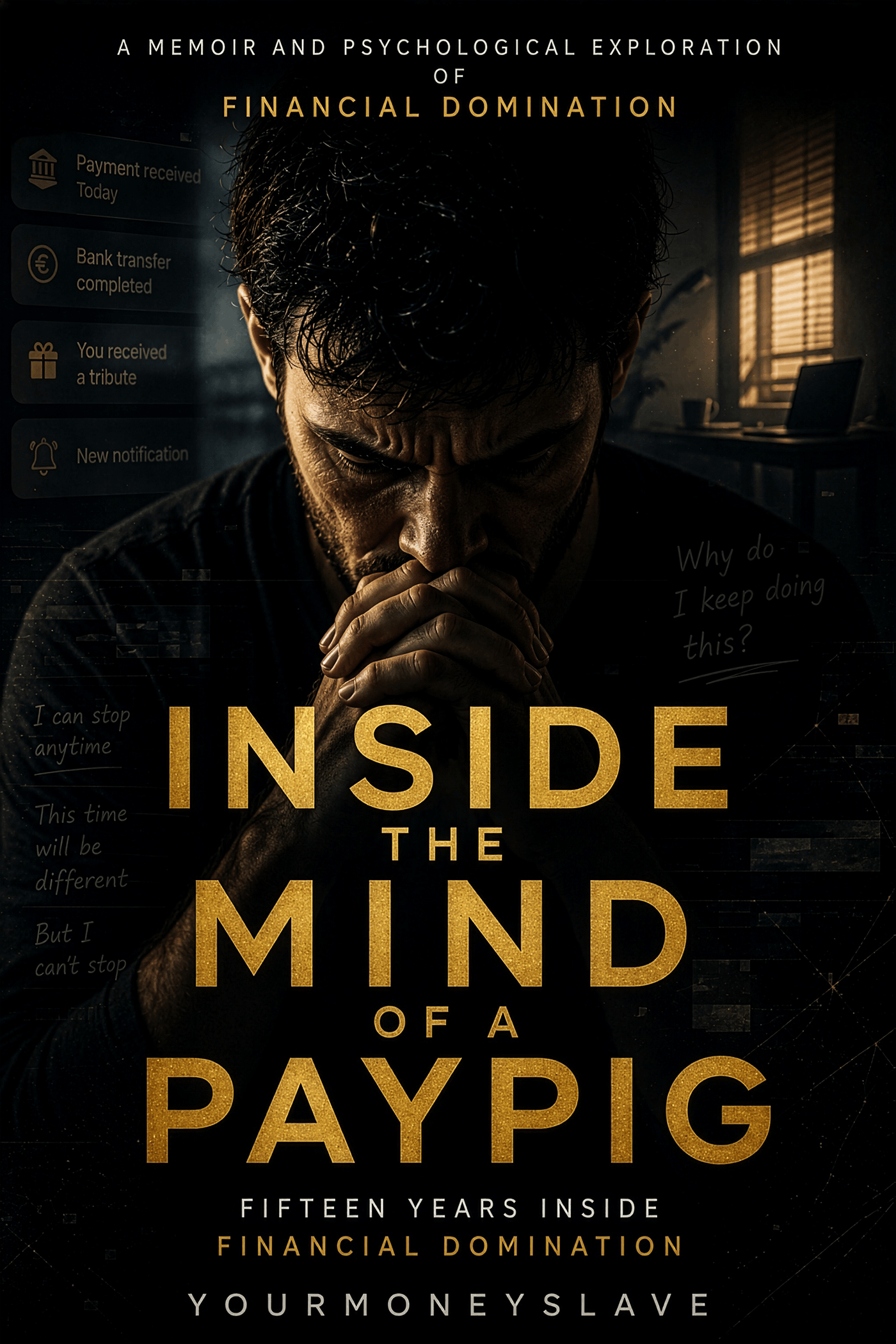
Inside The Mind Of A PayPig
After 15+ years inside financial domination, I finally wrote a book about obsession, shame, desire and the questions I am still trying to answer.
Read the free sample