Why financial domination causes shame and confusion — a paypig’s view
I started exploring financial domination as a submissive years ago, and I still remember the mix of excitement and unease. That tension, part desire, part self-judgment, is why financial domination causes shame and confusion for many people. I’ll walk through the common causes, what it feels like in real situations, and what helps reduce the worst of the distress.
How shame and confusion typically show up
Shame in this kink usually looks different from shame in other areas. It might be a persistent sense that something about you is wrong, or a gnawing fear that friends and family would think less of you if they knew. Confusion often centers on identity, questions like “Am I cheap or reckless?” or “Am I being manipulated or choosing this?”
Early on I read a lot to try to make sense of those feelings. If you want a short practical starter, here’s a link with approaches to finding a findomme safely, which helped me separate fantasy from risky behavior.
Why it causes shame: three overlapping reasons
- Money is moralized. We grow up hearing that how we handle money marks our character. Spending money on power exchange can feel like a moral failure, even when it’s consensual and affordable.
- Power is reversed and visible. In financial domination the submissive gives up something concrete: cash, cards, or purchases. That visible surrender makes the power dynamic obvious to the giver, and that visibility can trigger shame.
- Stigma and secrecy amplify doubt. This kink lives mostly in private. The secrecy breeds comparison: you wonder whether everyone else is fine and only you are broken.
Why it causes confusion: blurred boundaries and incentives
Confusion often comes from mixed incentives. You might feel genuine desire to submit, but also relief at avoiding decision-making, or shame that you’re avoiding other problems. Those layers are hard to untangle in the moment.
Another source of confusion is context. If your partner or a findomme mixes emotional validation with demands for money, it becomes unclear whether the affection is conditional. One domme I watched on a live stream used praise and withdrawal strategically; watching that, I felt both desired and disposable at the same time. That contradiction stayed with me for days.
Two short real-life examples
Example 1: I once sent a tribute after a bad day at work. The act felt cathartic, like punishing myself for being weak, then hours later I felt ashamed for spending on a fantasy instead of saving. That flip from relief to regret is common.
Example 2: A friend of mine paid for a small luxury a findomme suggested. At first he felt proud and valued. Later, when he noticed he’d delayed rent, the pride collapsed into confusion over whether the payment had been a genuine gift or an escape. He didn’t stop feeling both.
Trade-offs and tensions to recognize
- Consensual pleasure vs practical risk: submissive surrender can be deeply fulfilling, but it competes with everyday responsibilities.
- Authenticity vs performance: sometimes people present their payments as genuine devotion when they’re actually seeking approval or distraction.
- Privacy vs isolation: secrecy protects you from judgment, but it also keeps you from honest feedback that could prevent harm.
For a clearer framework on how this scene works in practice, I collected resources that helped me stay grounded in my own experience at useful resources.
Practical ways I learned to reduce shame and confusion
- Set financial hard limits first. Treat them like appointments you can’t break.
- Separate roles. Keep a journal that distinguishes what you did because you wanted to and what you did to escape other problems.
- Talk to a neutral friend or therapist if the shame feels relentless. Saying the story out loud often reveals what’s true and what’s storytelling.
- Slow down purchases. I wait 24–72 hours before sending anything large. The delay often clarifies whether it’s impulse or intention.
These steps helped me keep control without killing the kink. They’re not perfect, and sometimes I slip. The point is learning to accept complicated feelings instead of denying them.
When confusion signals real harm
Not all shame means something is wrong. But red flags include repeated missed bills, secret borrowing, and pressure from a domme that undermines your consent. If money exchange causes persistent harm, step back and reassess the relationship or the arrangement.
For those looking to balance devotion and safety, a short, lighthearted checklist I keep for myself is available at a playful list. It helped me create realistic boundaries without making the kink joyless.
Final thoughts
Shame and confusion around financial domination come from a mess of cultural messages, the tangible nature of money, and the secrecy that surrounds the kink. Recognize the mess. Be gentle with yourself. And be practical: clear limits, honest reflection, and outside feedback make the difference between a fulfilling practice and a harmful pattern.
I do not think why financial domination causes shame and confusion gets clearer when people add more drama around it. Most of the useful judgment happens in the small details that are easy to skip.
FAQ
- Is it normal to feel ashamed after paying a findomme? Yes. Many people feel a mix of pleasure and shame. That feeling alone doesn’t mean the practice is unhealthy, but it’s a signal worth examining.
- How do I tell if I’m being manipulated? Look for pressure, secrecy that prevents accountability, and arrangements that worsen your finances. If emotional praise is always tied to payments, that’s a warning sign.
- Can therapy help with this kind of shame? Yes. Talking with a therapist can help separate cultural shame from personal harm and build practical strategies for safer participation.
If you want to read more about why I wrote on this topic and my longer reflections, see why I wrote my book. For a broader guide to financial domination education, visit educational material.
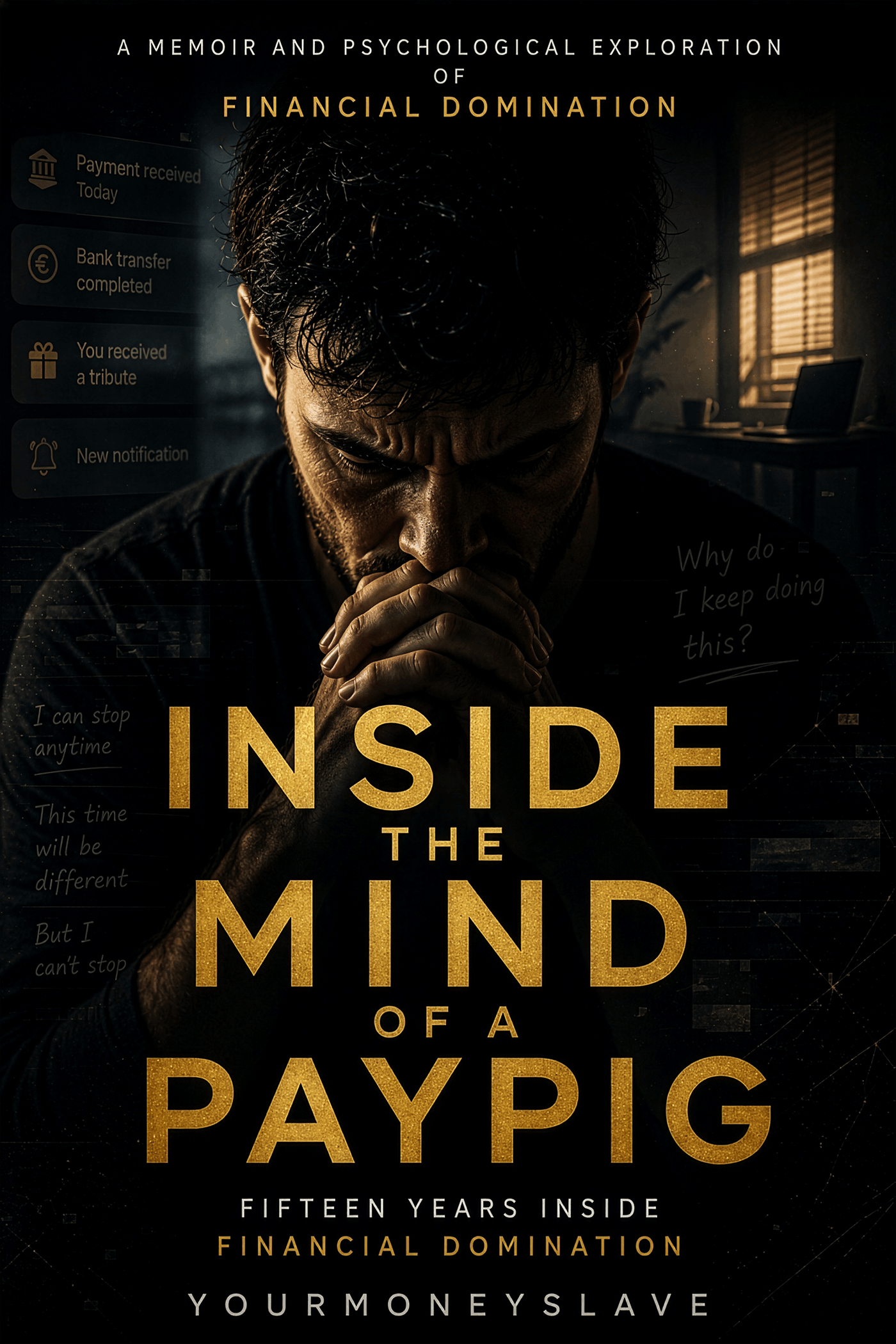
Inside The Mind Of A PayPig
After 15+ years inside financial domination, I finally wrote a book about obsession, shame, desire and the questions I am still trying to answer.
Read the free sample