Steps to Prepare Emotionally for a Live Findom Experience That Won’t Break You
I remember the first time I watched a live findom stream. I felt excited and nervous at the same time. I wanted the rush, but I also knew I could feel exposed, ashamed, or impulsive if I wasn’t careful. These steps helped me prepare emotionally so the experience felt meaningful instead of reckless.
Start by naming what you want and what you fear
Before any session, I write down two short lists: one that says what I want from the session, and one that names my biggest fears. Want might be something simple, like feeling seen or experiencing humiliation in a controlled way. Fear might be losing control of money, feeling embarrassed afterward, or being set up into a longer cycle of spending I didn’t plan for.
Writing these out makes the trade offs real. It helped me notice patterns, such as when excitement usually overrides the practical concern about my bank balance. If you want a quick starting point, read my short piece about realistic session expectations here.
Know your emotional baseline
Live sessions amplify feelings. If you show up anxious, tired, or lonely, a findom stream will likely intensify that state. I learned to check in with myself 24 hours before a session. Was I sleep-deprived? Had I been drinking? Was I trying to fill a gap after a bad day at work? If the answer was yes, I postponed.
There’s no moral judgment here. This is about avoiding decisions made from a place of emotional scarcity. A short walk, a brief call with a friend, or a five-minute breathing exercise can change whether you approach a session from a centered place or from raw impulse.
Set firm but simple financial limits
I treat money rules like safety gear. For a live findom session I pick one number that is non-negotiable for that session and one rule that prevents overspending across time. The non-negotiable number might be a single tribute cap. The second rule might be a weekly or monthly budget I stick to, no matter how tempted I get in the moment.
One practical thing that worked for me was using a temporary card or a prepaid balance. That way I could give an amount I was comfortable losing and keep the rest of my accounts offline. A findomme I watched once accepted a tribute and then immediately asked for another. Because I had a capped card, the interaction stopped at the number I chose, and I didn’t have to say no under pressure.
Practice small, reversible steps first
Jumping into a long, high-commitment stream is different from a short test. I recommend trying a short session, an auction that caps at a low amount, or a scripted clip that gives you a taste of the dynamic. This reduces the chance you discover an emotional reaction mid-stream that you can’t easily step away from.
For example, I once joined a 10-minute live chat where the domme used firm language but kept the scenario light. Afterward I realized I enjoyed the verbal control more than the public humiliation. That helped me pick safer formats going forward.
Decide a clear exit plan
Before I log in I choose two ways to stop the session. One is a simple phrase I tell myself to end my participation. The other is a technical step, like closing the browser, powering off the video feed, or cutting off the prepaid card. If I feel pressured, I use the technical solution immediately. Planning both verbal and technical exits reduces the second-guessing that often follows impulsive spending.
Anticipate emotional aftercare
Post-session feelings vary. Sometimes I felt elated, sometimes drained, and once I felt ashamed. Aftercare for me means three things: a short grounding ritual, a check-in with a friend, and a note in my spending tracker. Grounding can be as simple as making tea or stepping outside for five minutes. Talking to someone who knows my limits helps normalize what I felt without judgment.
Learn to read cues from the performer
Not all findommes run sessions the same way. Some test boundaries, some play long games, and some keep everything scripted. From the submissive side, that felt obvious after a few sessions. One domme I watched made a point of pausing after each tribute to ask if I wanted to continue. That pause gave me space. Another moved fast and assumed unlimited spending, which triggered anxiety.
Watching a few streams without participating teaches you the pace and etiquette of different performers. That observation time is worth more than a risky impulse tribute.
When to avoid live sessions
There are times when even the best preparation won’t be enough. If I’m emotionally raw from a breakup, recovering from substance use, or in a period of financial instability, I skip live sessions. I let curiosity sit for a month and then reevaluate. Missing one session doesn’t close the door forever, and often the distance makes the next experience clearer.
I tend to trust the quieter signals with steps to prepare emotionally for a live findom experience. If the setup only works when you move fast or stop asking basic questions, that usually tells you more than the sales pitch does.
I would also review this related article to compare this angle with a related perspective before making assumptions.
I would also review this related article to compare this angle with a related perspective before making assumptions.
FAQ
- How much should I budget for a first live findom session? Start with an amount you can afford to lose emotionally and financially. A small, disposable prepaid balance is a good test.
- What if I feel ashamed after spending? Plan for aftercare. Reach out to a friend, write down why you acted the way you did, and review your financial rule to adjust it for next time.
- Can live findom be safe for people in relationships? It depends on boundaries you and your partner set. Honest conversations before any session are essential, and secrecy is a clear red flag.
If you want a concise checklist for first session expectations, see my quick guide here. If you notice the dynamic shifting away from what it used to be, this short piece helped me spot that early read it. For people running scenes or offering guidance, there are useful resources for models that explain boundaries and consent available here.
Emotional preparation is not about eliminating risk. It’s about making choices that respect your feelings and your finances. If you treat your limits like tools rather than obstacles, you’ll get closer to the kind of live findom experience you actually wanted.
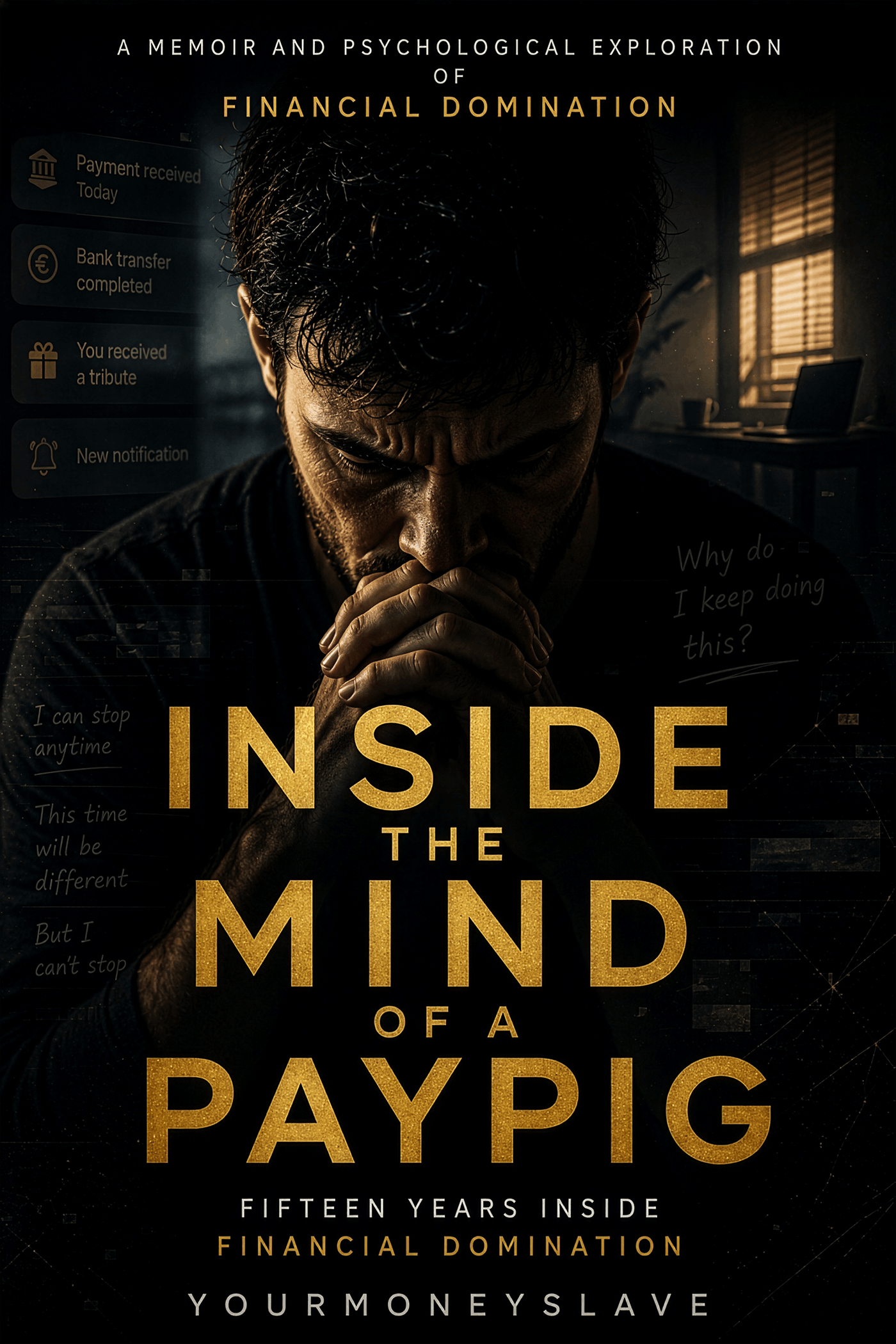
Inside The Mind Of A PayPig
After 15+ years inside financial domination, I finally wrote a book about obsession, shame, desire and the questions I am still trying to answer.
Read the free sample