Emotional triggers that affect financial domination relationships — what I learned as a paypig
I’ve followed and participated in financial domination scenes for years, and the emotional triggers are often the quiet engine behind why people pay, stay, or walk away. Understanding them helped me spot patterns in my own behavior and in the performers I watched, and it can help anyone, whether you’re a curious newcomer, a devoted paypig, or a findomme trying to create safer dynamics.
Early on I didn’t realize how much past shame, scarcity, or a need for recognition pushed my choices. One domme I watched turned a simple compliment into weeks of obsession for me. That sounds dramatic, but it was a trigger: praise mixed with exclusivity made me want to earn more attention by giving more money. The emotional payoff kept me paying long after it stopped feeling rational.
Before I list common triggers, a quick note: not everyone reacts the same way. Context, history, and the platform matter. Still, certain emotional levers show up repeatedly in conversations and scenes, and knowing them helps you make clearer decisions.
Common emotional triggers and how they play out
Below are triggers I’ve seen and felt. I describe how they work, subtle signs they’re active, and what they might cost you emotionally or financially.
- Validation and approval. Praise, attention, or being singled out can feel addictive. A brief message like “you’re my favorite” can make someone keep paying to stay on that list. Sign: you prioritize tribute over bills or commitments.
- Shame and penance. Feeling guilty about desires or mistakes can lead to paying as a form of self-punishment. One real example: after a bad breakup I impulsively sent money to a performer who framed donations as penance. The relief was temporary and followed by regret.
- Scarcity and urgency. Limited offers, countdowns, or “I’ll only notice you if you top the list” create pressure. They can convert curiosity into immediate spending. Sign: you feel rushed and later wonder why you acted so fast.
- Powerlessness and surrender. For some, the release of control is the reward. Giving money becomes symbolic of letting go. That surrender can be healing, but it can also let others exploit emotional vulnerability.
- Reward conditioning. Repeated patterns, small tributes rewarded with attention, train you to expect the same payoff. Over time, payments feel like routine rather than conscious choice.
- Social comparison and status. Seeing others thanked publicly or granted special access can trigger competitive giving. It’s less about the domme and more about status within the scene.
I linked a short piece I wrote about why I turned these experiences into a book, and that background might make some of the patterns below clearer: why I wrote a book about financial domination.
How platforms and presentation change triggers
Different platforms shape emotional mechanics. Pay sites with leaderboards highlight status triggers. Private DMs invite intimacy and validation. Live streams increase scarcity and urgency. I watched a performer use timed auctions and saw how quickly polite curiosity turned into repeated bids.
One domme I followed used slow, deliberate attention in DMs. The attention felt personal, and that intimacy became an anchor I chased. It made me more willing to follow rules and offer more over time, even when my initial budget was small.
Another useful resource for finding respectful performers and learning the basics is here: how to find a findomme. It helped me separate impulse from intention.
Trade-offs and tensions
There’s no pure good or evil here. Emotional triggers can make scenes rich and meaningful. Validation can heal. Surrender can feel freeing. But the same triggers can lead to regret when the emotional reward dries up or when you realize you were acting out of an old wound.
- Emotional payoff vs. financial cost: short-term relief often masks long-term loss.
- Authentic intimacy vs. manufactured scarcity: scripted urgency can feel like connection until you test it.
- Agency vs. surrender: surrender is a valid kink, but it requires checkpoints to keep it consensual.
Practical ways I learned to recognize and manage triggers
I don’t pretend to have perfect answers. I learned by paying attention and testing rules that kept me accountable.
- Pause before you pay. I wait five minutes, sometimes a day, before following through on an impulsive tribute. The immediate pressure fades and the decision feels clearer.
- Track patterns. I kept a private note of sessions and feelings. Seeing repeated triggers, like paying after loneliness, helped me change behavior.
- Set small boundaries. For me that meant fixed, low monthly limits and sticking to them. A findomme can mention limits publicly, and that transparency reduces urgency-driven spends.
- Use neutral check-ins. Talking with a non-scene friend or therapist helped me separate healthy desire from reactive spending.
If you want resources that helped me stay sane and enjoy scenes responsibly, this page collects practical guidance: financial domination resources.
Ethical considerations for performers and consumers
From the submissive side, I expect clear boundaries and honest signals. A performer can create excitement without exploiting trauma. When urgency, guilt, or shame are explicit tools with no space for consent checks, the power balance tips into harm.
On the flip side, some performers rely on edge and intensity by design. That’s a valid style if it’s consensual and transparent. As a paypig I look for cues: does the performer offer opt-outs? Do they acknowledge limits? Those small signs matter more than marketing lines.
Short FAQ
- How common are these triggers? They’re common enough to be predictable, but people vary. Not everyone is driven by the same emotions.
- Can you enjoy financial domination without being exploited? Yes. Clear boundaries, pause habits, and honest performers help keep experiences positive.
- When should I seek outside help? If paying causes major financial stress, persistent shame, or stops you from meeting obligations, talk to a therapist or a trusted non-scene person.
Finally, if you want a lighthearted look at life as a devoted paypig, these reflections helped me stay grounded and laugh at my own mistakes: 10 New Year’s resolutions for the devoted paypig.
Understanding emotional triggers won’t remove desire, and it shouldn’t. It will, though, let you choose how those desires shape your life.
What keeps standing out to me with emotional triggers that affect financial domination relationships is how often people chase intensity and miss consistency. The safer option usually looks a little less exciting at first.
I would also review this educational overview to compare this angle with a related perspective before making assumptions.
Common questions
What usually matters most with emotional triggers that affect financial domination relationships? Usually it comes down to pace and context. People get into trouble when they treat the first impression as proof instead of checking whether the details hold up.
Why do people get this wrong? Because urgency distorts judgment. If something already feels charged, flattering, or a little hard to verify, people often fill in the gaps with what they want to be true.
What would I do first? I would slow the situation down, compare a few concrete signals, and make one small decision before making a bigger one.
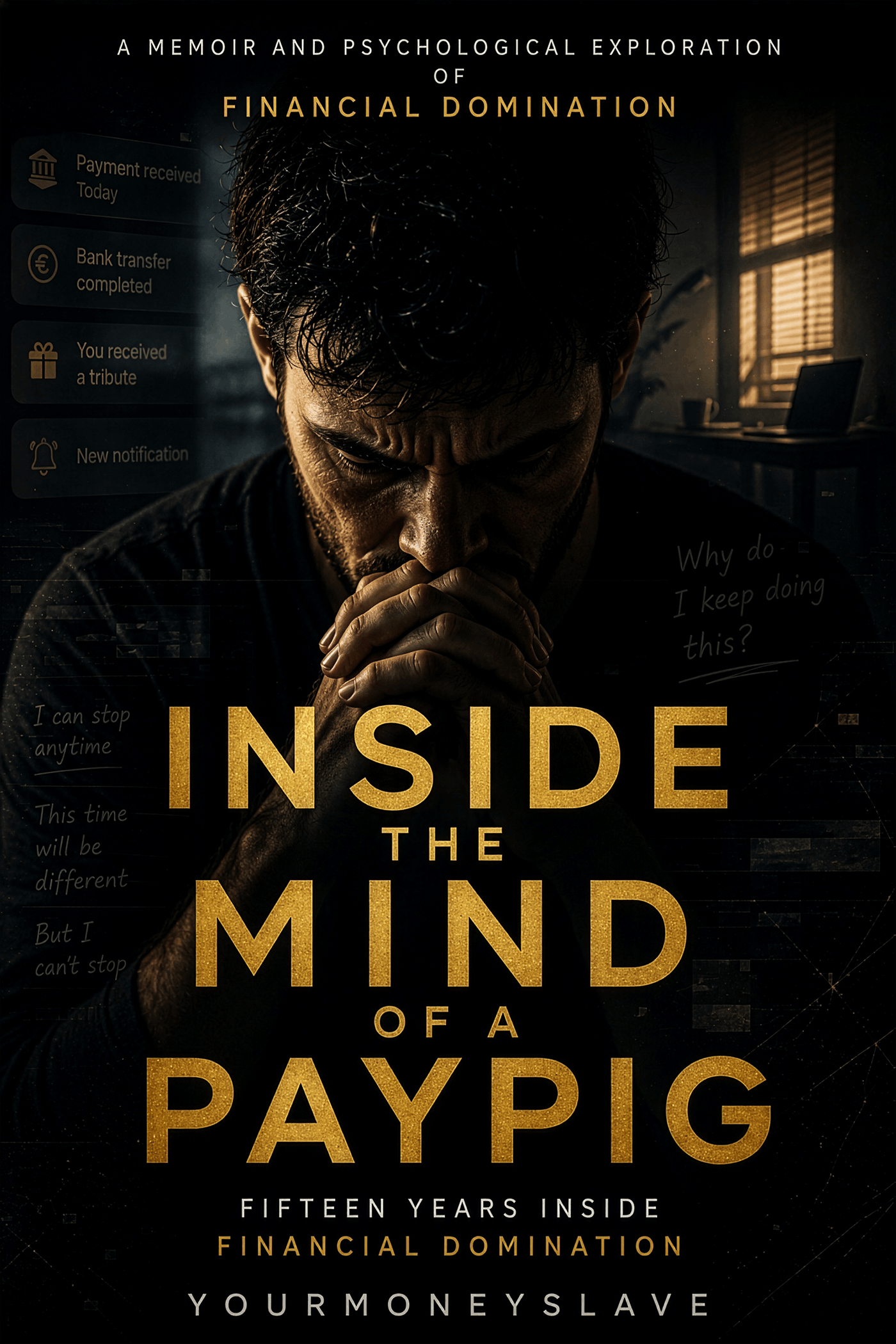
Inside The Mind Of A PayPig
After 15+ years inside financial domination, I finally wrote a book about obsession, shame, desire and the questions I am still trying to answer.
Read the free sample