Differences Between Findom Addiction and Submission — how to tell and what it means
I started paying cash to a dominatrix years ago and learned quickly that not every urge to give was the same. Some moments felt like vivid, consensual submission. Other times I later realized I’d been chasing a compulsion that caused harm. The differences between findom addiction and submission matter because they change how you should respond and who should be involved.
Early on I read everything I could. I also kept a small, private journal tracking how I felt before, during, and after each session. That simple habit helped me spot patterns other people miss. If you want a quick read that covers signs, motivations, examples, and practical steps, this article is based on lived experience and observation rather than theory alone.
Before I get into signs and examples, one practical resource I found useful when sorting feelings was an honest piece on balancing findom and relationships, which helped me think about boundaries and expectations in real relationships.
How I separate the two in my head
Submission is an erotic or emotional state. It’s about surrender, structure, and the exchange of power. Findom addiction is a pattern where the act of giving, usually money, becomes compulsive and harmful. The same action can be either, depending on context.
- Motivation: Submission is chosen for pleasure or intimacy. Addiction is driven by relief, anxiety reduction, or a need to repeat despite harm.
- Control: In healthy submission I keep and set limits. With addiction limits erode and consequences pile up.
- Aftermath: Submission often leaves you satisfied or emotionally close. Addiction leaves shame, debt, or numbness.
Those simple contrasts guide everything else I watch for.
Signs that lean toward addiction
- Recurring remorse or secrecy about spending, paired with lying to partners or friends about amounts.
- Escalating amounts to chase the same feeling, or making unsafe financial choices like borrowing to give.
- Using findom to escape unrelated stress repeatedly, not because the dynamic itself is rewarding.
- Neglecting essential bills, work, or relationships after tribute or sessions.
- Feeling restless or unable to stop even when you plan to.
One subtle example from my life: I once paid for a lengthy tribute stream during a week when I had an overdue utility bill. At the time I justified it as a rare treat. Later I saw a pattern, whenever I felt anxious about money I sought out a pay-to-play experience. That pattern pointed to addiction more than submission.
Signs that lean toward consensual submission
- Clear limits and a budget for play that you keep without excuses.
- Giving enhances other parts of life: you sleep better, feel emotionally closer to the domme, or it integrates with a kink you enjoy.
- Transparent communication and comfort with post-session reflection, whether that means praise or gentle correction.
- Occasional withdrawal if you abstain, but no lasting harm or mounting consequences.
I remember a different scenario: I planned and budgeted for an online session with a domme whose style I admired. I set a hard cap, enjoyed the humiliation ritual, and felt energized afterward. The contrast with the earlier example, same basic activity, different outcome, helped me understand how important planning and honesty are.
Gray areas and why they matter
The line between addiction and submission gets fuzzy. Shame can hide an otherwise consensual practice. A relationship problem or a bad week can push someone temporarily toward compulsive behavior without full-blown addiction. That ambiguity calls for curiosity instead of judgment.
Trade-offs exist. Submitting financially can be a powerful erotic shortcut for intimacy, especially when time or geography limit other options. But it also increases financial risk and can create dependency on a single source of validation. Those tensions matter when you decide whether to continue, reduce, or stop.
Practical steps if you’re unsure
- Track your spending and feelings for a month. Note what you did before the impulse, how you felt during, and your mood afterward.
- Set a budget and a cooling-off rule: wait 24–72 hours before sending anything beyond planned amounts.
- Talk to a trusted friend or therapist about finances and compulsion, not just kink. A therapist can help separate emotional drivers from erotic ones.
- Use structural controls: remove saved cards, use prepaid methods, or hand a partner oversight if that fits your consent framework.
A practical tip I used: I disabled one-click payment options and switched to small prepaid cards for tribute. That friction forced a pause and cut impulsive buys by half.
When to seek help
Seek professional help if spending causes recurring debt, you hide transactions, or you can’t stop despite clear harm. You don’t have to wait for a crisis. Early, honest steps make a big difference.
For people balancing findom with relationships, a frank conversation about boundaries helped me avoid several mistakes. Reading about others who tried to mix findom and committed relationships also gave me perspective on risks and compromises.
Real-life examples, briefly
- Example one: A friend I knew paid irregular but large tributes after breakups. He later recognized he used giving to numb loneliness and stopped after therapy helped him find other coping methods.
- Example two: An acquaintance set a ritual: each month he saved a set amount for tribute and reviewed his choices with an accountability buddy. That structure made the play feel richer, not ruinous.
Neither story is tidy. Both show how context and self-awareness change outcomes.
Midway through sorting my own feelings I read an analysis of session styles and motivations that sharpened my questions about consent and punishment versus pleasure. It’s a useful read if you want to explore those differences more deeply about session dynamics.
Quick checklist to decide where you stand
- Do you plan and feel satisfied afterward? Leaning toward submission.
- Do you escalate, hide, or feel shame repeatedly? Leaning toward addiction.
- Does it harm relationships, work, or basic living? Seek help.
These are not diagnostic criteria. They’re prompts to help you take the next step honestly.
What keeps standing out to me with differences between findom addiction and submission is how often people chase intensity and miss consistency. The safer option usually looks a little less exciting at first.
FAQ
- Can consensual findom become addiction? Yes. Consensual play can slide into compulsion if unchecked. Regular reflection and limits help prevent that slide.
- How do I tell a domme about my concerns without being judged? Be direct. Say you want to keep things enjoyable and ask for help enforcing limits. A professional domme who understands boundaries will respect that.
- Are there safe alternatives if I want the feeling without financial risk? Yes. Roleplay, controlled rituals, or symbolic tributes like timed tasks or token gifts can reproduce power exchange without draining your account.
If you need resources on warning signs specifically for paypigs, that piece helped me see patterns others miss about common issues. I don’t have all the answers, but honest tracking and small structural changes helped me keep submission healthy instead of harmful.
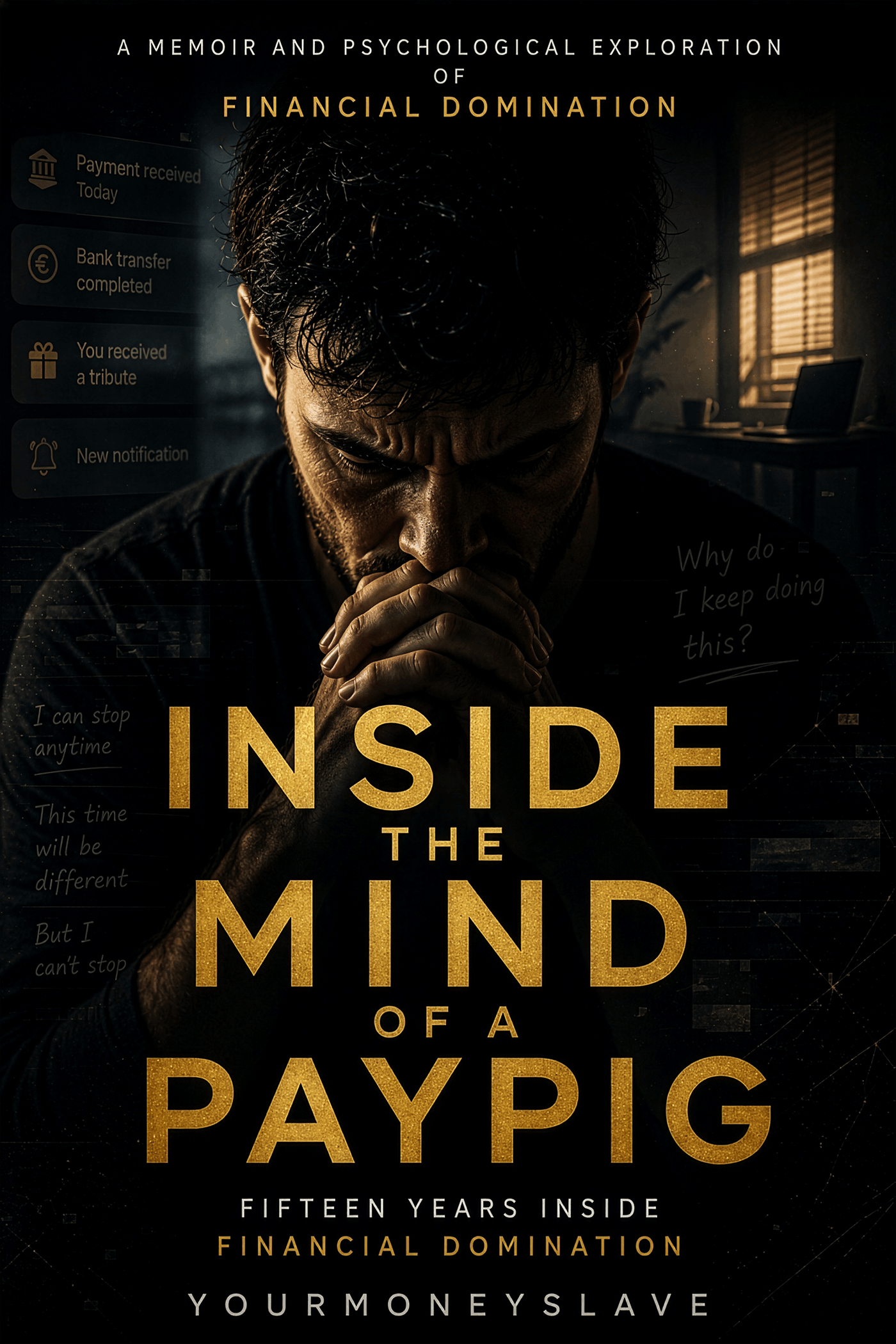
Inside The Mind Of A PayPig
After 15+ years inside financial domination, I finally wrote a book about obsession, shame, desire and the questions I am still trying to answer.
Read the free sample