Differences Between Findom Addiction and Consensual Submission — How to Tell Which One It Is
I learned the hard way that financial submission can feel like two very different things: a consensual kink I chose, and something that quietly took over my life. If you’re searching for differences between findom addiction and consensual submission, you want clear signs, real examples, and practical ways to protect yourself. Early on I read a useful post on whether findom and committed relationships can coexist, and that perspective shaped how I started spotting red flags.
What I mean by “consensual submission” and “findom addiction”
Consensual submission is a negotiated role. I give money as part of a power exchange, and both sides agree on limits, frequency, and purpose. There are rules, but the rules are flexible and meant to enhance trust and pleasure.
Findom addiction is when the giving stops being about negotiated erotic exchange and becomes a compulsion. The person keeps giving despite harm to finances, relationships, or well-being. The exchange no longer feels mutual. I learned to listen to my gut when the decisions I made for pleasure started to feel automatic and desperate.
How the experiences feel different
- Choice vs autopilot , In consensual submission I plan a tribute, save for it, and feel a sense of fulfillment afterward. With addiction, I found myself giving impulsively, then feeling numb or ashamed.
- Control vs loss of control , Consensual play has boundaries that can be renegotiated. Addiction erodes those boundaries. I remember promising myself one small gift and then topping up my payments without thinking.
- Pleasure vs relief , Healthy submission brings arousal, pride, or closeness. Addiction often provides only temporary relief from anxiety, followed by regret.
- Transparency vs secrecy , With consensual partners I could talk money and limits. Addiction pushed me toward secrecy, hiding transactions or lying about spending.
Two real-life style examples
Example one: I followed a domme whose style was blunt and controlling. We had a brief agreement: I would tribute small amounts for themed sessions. For months that worked fine. Then I started adding unscheduled tips after feeling anxious about not pleasing her. I told myself it was part of devotion, but those extra payments came from money I had set aside for rent. That felt like losing ground.
Example two: A friend described watching a domination stream where the performer rewarded tippers with praise. At first he set a limit and felt excited to hit it. Later he found himself refreshing the stream every night, spending just to feel noticed. He wasn’t seeking humiliation or structure, just the high of being seen. When bills went unpaid, he stopped attending social events and cut off people asking about his finances. That pattern fit what I would call addictive behavior.
Questions to ask yourself
- Do I plan these payments, or do I give on impulse?
- Am I hiding transactions from friends or family?
- Would I feel okay if I stopped for a month?
- Do the payments meet a negotiated kink, or are they trying to fix boredom or anxiety?
Gray areas and tensions
Not every secret payment means addiction. Sometimes people keep their kinks private for safety or embarrassment. Also, financial desire and compulsion can coexist. I found myself wanting to be generous as part of my play identity, and that desire blurred with moments of compulsion. The tension shows up when rules meant to protect pleasure instead become baskets for avoidance.
Practical steps I used to stay honest
- Create a tribute budget in a separate account. If the money is visible and allocated, impulse giving drops dramatically.
- Set a 48-hour rule for unplanned payments. If the urge still feels right after a cooling-off period, consider it.
- Track not only spending but feelings. Note how you feel before and after giving. Patterns become clearer when written down.
- Talk to someone you trust about your limits. Even a single accountability check-in reduces secrecy.
For context on how findom interacts with real-world relationships, I often point people to a thoughtful piece about making findom and a committed relationship coexist, which helped me frame healthy boundaries early on.
When to seek outside help
If giving disrupts housing, savings, or work, it’s time to involve a professional. Addiction specialists and therapists who understand sexual behavior can help. I also found peer groups and forums where people shared coping strategies without judgement. They helped me see that correcting course is practical and not shameful.
Advice for findommes from a submissive observer
As someone who’s paid and learned, I offer a few direct suggestions. A findomme can set clear frequency expectations and require opt-in agreements for bonus content. One domme I watched include safety language in her profiles; that small step made a lot of payers feel safer and reduced frantic tipping. Clear refund or pause policies also lower the risk that giving turns compulsive.
Where uncertainty remains
Not every case fits neat definitions. Some people move between consensual play and periods of compulsive behavior depending on stress, relationships, and mental health. My own path had relapses and better weeks. The only honest approach is to treat patterns as signals to be noticed, not as moral failures.
Before you decide to stop or continue, read more about what sessions can actually mean for participants. That helped me separate performative dominance from safer, structured dynamics.
What keeps standing out to me with differences between findom addiction and consensual submission is how often people chase intensity and miss consistency. The safer option usually looks a little less exciting at first.
I would also review this related article to compare this angle with a related perspective before making assumptions.
I would also review this related article to compare this angle with a related perspective before making assumptions.
I would also review these warning signs to compare this angle with a related perspective before making assumptions.
FAQ
- How common is findom addiction? I can’t give numbers, but from conversations and forums it appears uncommon relative to casual tipping. Still, it’s real and worth watching for when financial harm appears.
- Can someone be both a consensual submissive and an addict at different times? Yes. Stress, mental health, and life changes can shift behavior. Monitoring patterns helps you tell which state you’re in.
- What immediate step should I take if I think I’m addicted? Pause unplanned payments, move tribute funds to a separate account, and talk to a therapist or a trusted friend. Removing immediate access to funds reduces harm.
If you want a deeper look at session types and how they affect emotional outcomes, there’s a useful exploration I consulted while learning to recognize the differences between pleasure and punishment. And if you’re worried about warning signs for paypigs specifically, I also recommend this practical guide on issues and warnings that helped me set firmer limits.
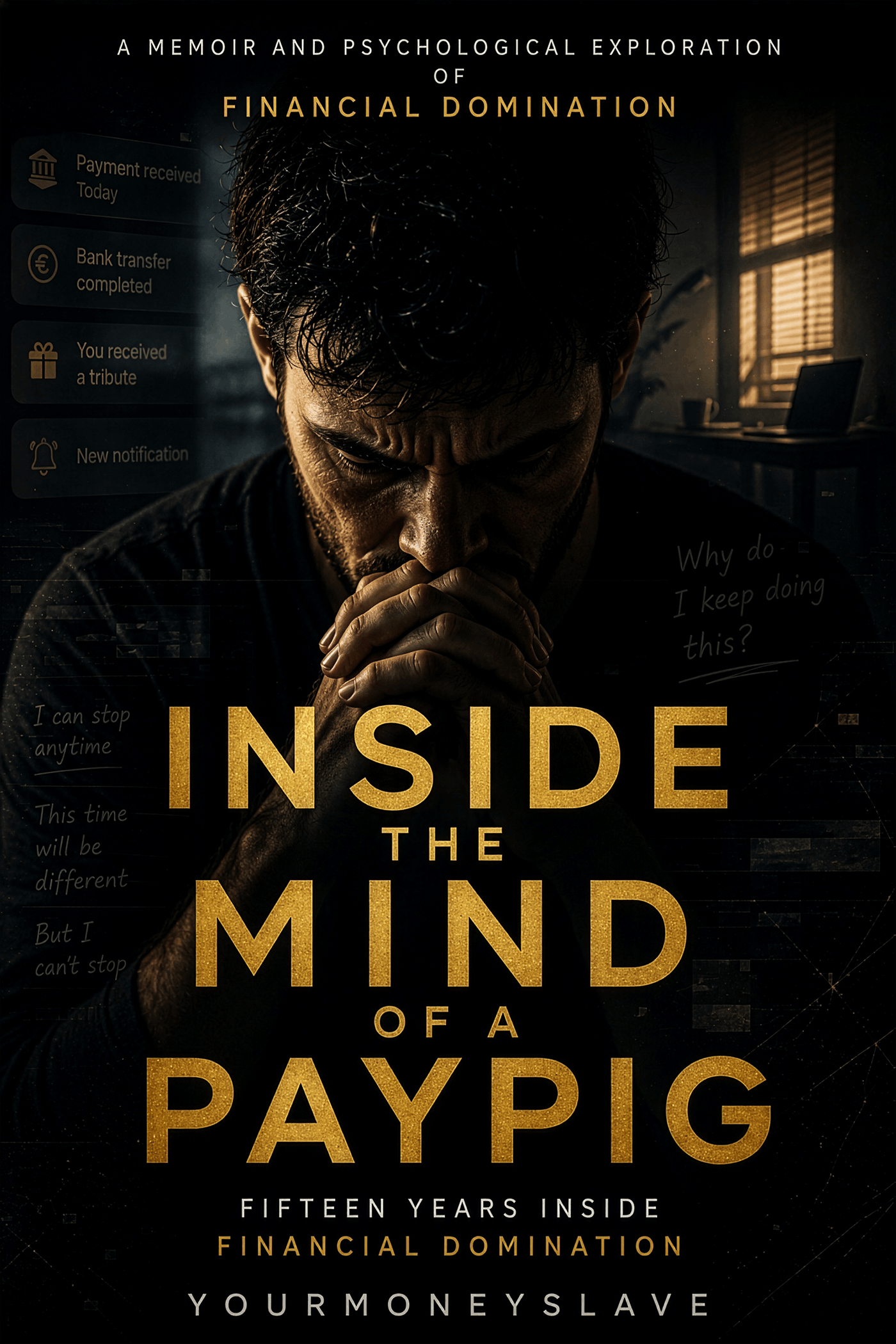
Inside The Mind Of A PayPig
After 15+ years inside financial domination, I finally wrote a book about obsession, shame, desire and the questions I am still trying to answer.
Read the free sample