Difference Between Findom Addiction and Voluntary Submission: How to Tell the Line
I’ve spent years as a submissive and paypig, watching myself and others move through findom dynamics. The difference between findom addiction and voluntary submission matters because it affects consent, safety, and long term well being.
What I mean by each term
Voluntary submission is a choice rooted in erotic or emotional satisfaction. You give money, attention, or control because it feels meaningful, erotic, or bonding. It’s usually mixed with other activities and personal limits.
Findom addiction is when the compulsion to give overrides your values or harms you financially, socially, or mentally. It feels less like a scene and more like a need you can’t easily stop, even after seeing negative consequences.
Early on I wrote about how findom can coexist with a relationship, and that overlap taught me a lot about consent and boundaries: how it can affect partners.
Motivations: desire versus compulsion
Ask why you give. With voluntary submission the answer is often simple: I enjoy the humiliation, praise, or ritual. It amplifies arousal or closeness. With addiction the why is slippery. You might say you enjoy it, but beneath that is a relief from anxiety, boredom, or an urge that grows over time.
One friend told me she started sending tributes to feel seen after a breakup. It began as a deliberate choice and stayed that way. Another guy I know started with small gifts but began raiding savings, then hiding transactions. He said at first it soothed him, then it felt like something he had to do.
Behavioral signs that point to addiction
- Loss of control: repeated failed attempts to stop or cut back.
- Neglect: bills, relationships, or job performance suffering because of spending or obsession.
- Secrecy and shame that grow over time.
- Escalation: needing larger tributes or riskier interactions to get the same effect.
These signs don’t prove addiction on their own. They suggest a pattern when they cluster and persist.
How voluntary submission looks in practice
Voluntary submission often includes limits and rituals. You set a budget, a schedule, or an explicit scene. The giving is gratifying, and there are pauses. You can take breaks without panic.
For example, I followed a routine where I sent a weekly tribute sized to my budget. It felt ritualized and erotic. When life changed I could pause for a month and still feel connected to that desire.
Gray areas and common tensions
Not everything fits neatly. You can be a voluntary submitter who occasionally loses control. You can also have addictive patterns around one domme and healthy patterns with others. The relationship between shame and desire is complicated. Shame can fuel giving, and giving can produce new shame.
There’s also the role of a domme’s techniques. One domme I watched used scarcity and praise to drive repeat tributes. That can be part of consensual play, but it can push someone toward harmful escalation if they already struggle with impulse control.
Practical questions to decide where you stand
- Can you stop or pause without intense distress?
- Is your giving within a prearranged budget you can afford?
- Do you hide transactions or lie about time spent?
- Are you neglecting responsibilities or relationships?
If you answer yes to two or more in a way that shows repeated harm, treat it as a problem worth addressing.
How to shift from harmful patterns back toward voluntary submission
Small, practical steps work. Cut the flow, not the fantasy. Freeze payments, remove saved card details, and set hard calendar limits. Replace giving with other rituals that preserve meaning, like writing a scene, roleplaying without money, or sending a symbolic message.
Therapy or peer support helps. I found talking to a therapist who understood kink useful. It wasn’t about guilt. It was about finding the mechanics behind the impulse and creating realistic boundaries.
Advice for dommes and content creators, from a submissive
If you create findom content, consider clearer signals for consent and safe escalation. A findomme can set explicit tribute ranges and remind buyers about limits. Those gestures protect both parties and keep the exchange sustainable. From the submissive side, I appreciated when a domme included reminders to check budgets. It felt responsible, not controlling.
When to get outside help
If giving causes repeated financial hardship, legal trouble, or severe relationship breakdown, seek professional help. Debt counselors, therapists, and support groups can help without moral judgment. Addiction often responds better to practical structure than shame.
Final trade-offs to consider
Voluntary submission preserves agency and long term satisfaction, but it can feel less intense than the thrill of compulsive giving. Addiction gives powerful short term relief but costs control, money, and sometimes dignity. The trade-off is between intensity now and stability later. I chose stability after seeing how quickly compulsive patterns ate savings and trust.
If you want to explore how findom functions inside relationships, I wrote more about the friction it creates here: how sessions can affect partners.
I tend to trust the quieter signals with difference between findom addiction and voluntary submission. If the setup only works when you move fast or stop asking basic questions, that usually tells you more than the sales pitch does.
FAQ
- Can someone switch between addiction and voluntary submission?
Yes. Life changes, stress, and techniques used by a domme can shift patterns. Pay attention to signs and act early. - Is it always wrong to enjoy findom a lot?
No. Intense enjoyment is fine when it stays within your values and you don’t harm yourself or others. - How do I tell a domme about limits without killing the vibe?
Be honest and tactical. Frame limits as part of the scene. A good domme will respect boundaries and may even incorporate them into the dynamic.
For practical warnings and red flags geared to paypigs specifically, see this resource: issues and warnings for paypigs.
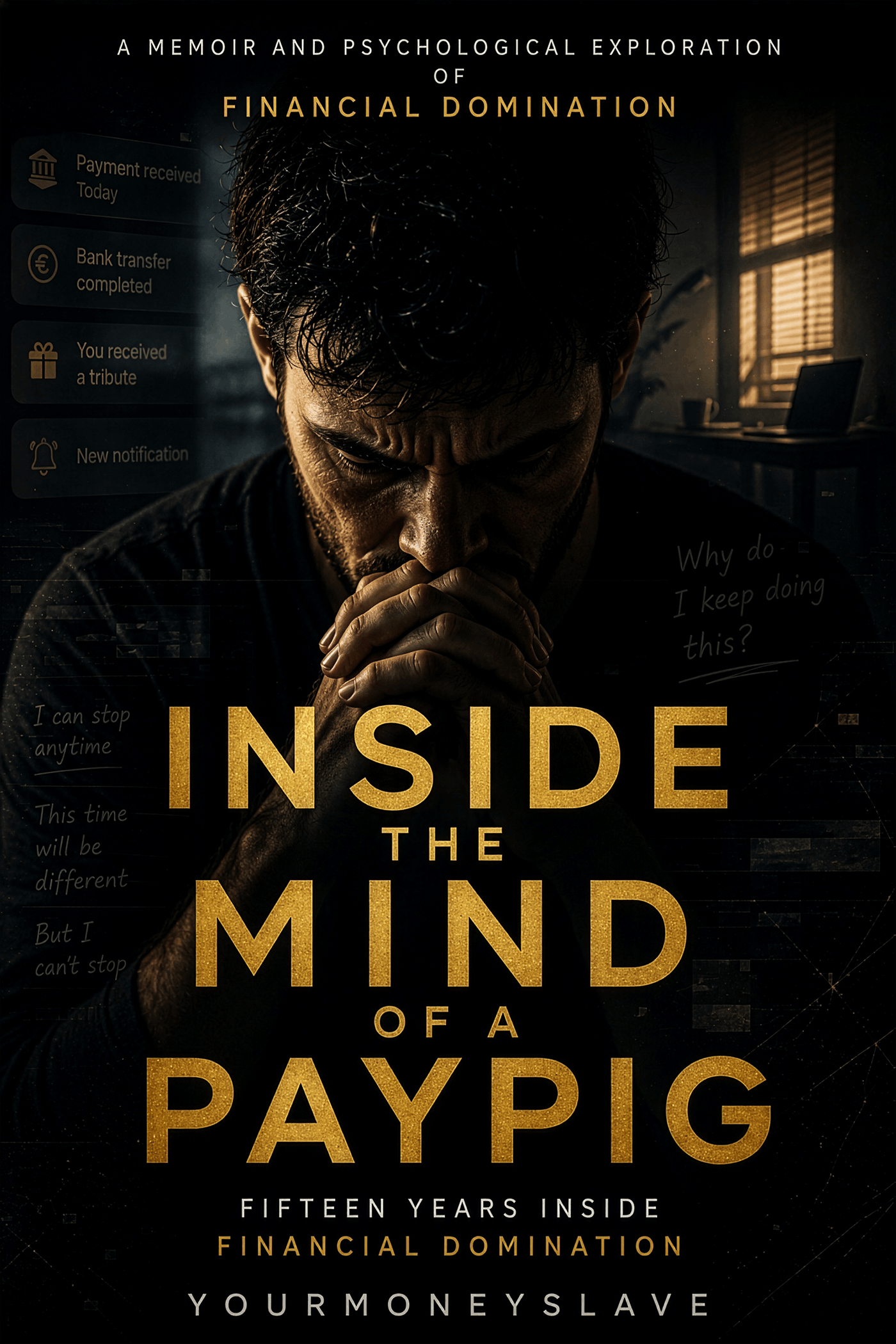
Inside The Mind Of A PayPig
After 15+ years inside financial domination, I finally wrote a book about obsession, shame, desire and the questions I am still trying to answer.
Read the free sample